





















Member Blog: Secretive platypus behaviour caught on camera
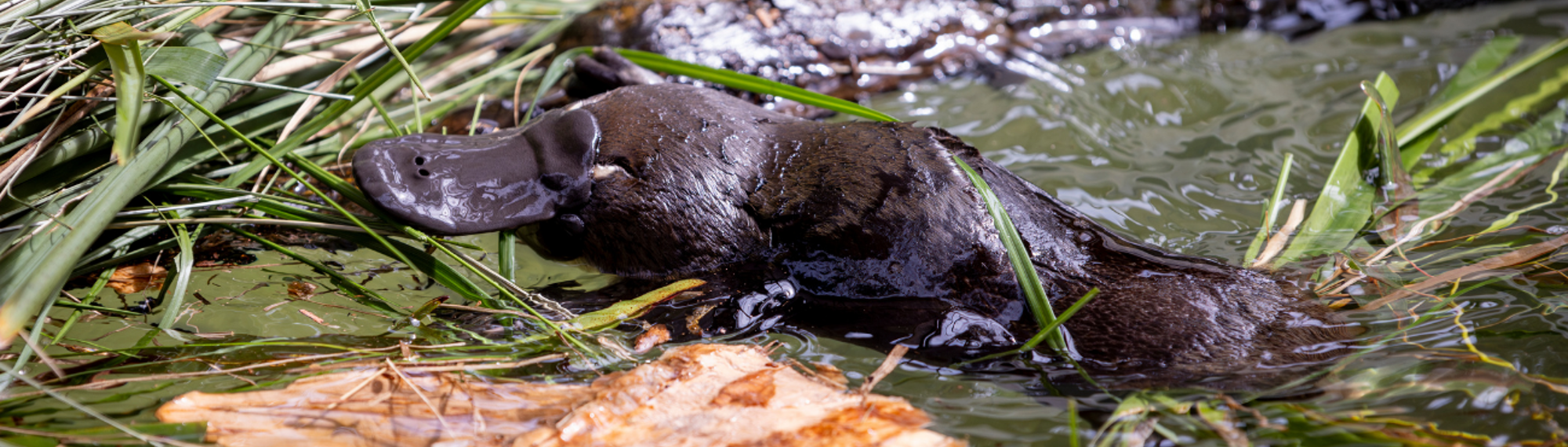
A rare glimpse into the secret life of one of Australia’s most elusive animals has been caught on camera, with a female Platypus at Healesville Sanctuary spotted collecting nesting material with her tail as they head into breeding season.
Yami [Pron: YAH-me] has been paired with a male Platypus called Wally, who is on exchange from David Fleay’s Wildlife Park on the Gold Coast to introduce new genetics.
Healesville Sanctuary Platypus Specialist Dr Jessica Thomas said it is very rare for people to observe a Platypus collecting vegetation out in the wild because most of the time it happens at night, and they are very secretive about when they are doing it.
“From the few observations we’ve seen, the females go out and collect any kind of wet vegetation that they can find in their area. That is why having creeks and rivers with lots of plants along the banks that’ll drop leaves and bark into the water is essential for Platypuses to breed out in the wild,” Dr Thomas said.
Platypus nesting burrows function as an underground nursery where a female can lay her eggs and successfully raise her young.
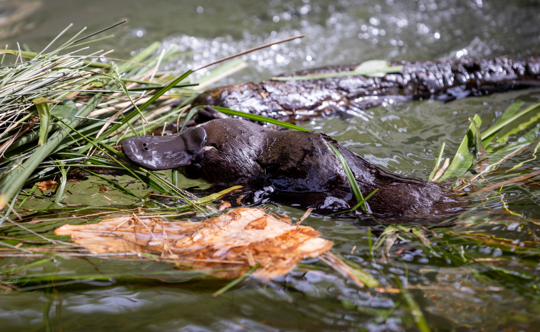
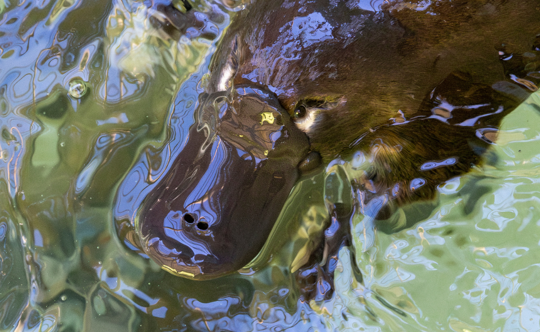
Dr Thomas said, “We find that Yami particularly likes Tussock grasses and Mat rushes to create her burrow. She’ll also collect gum leaves that she finds, other leaves and pieces of bark.”
“Yami passes the grasses from her bill under her body into her tail which she turns into a hook. This is a great way that she can carry that vegetation back underground into her mysterious nesting burrow where she can weave and sow it into an elaborate nest.”
The wet vegetation is important because when the eggs are laid, they are very fragile and they need to be kept in an environment that has a specific humidity. This stops the eggs from desiccating and ensures the burrow is warm while the nestlings develop and mum is out feeding.
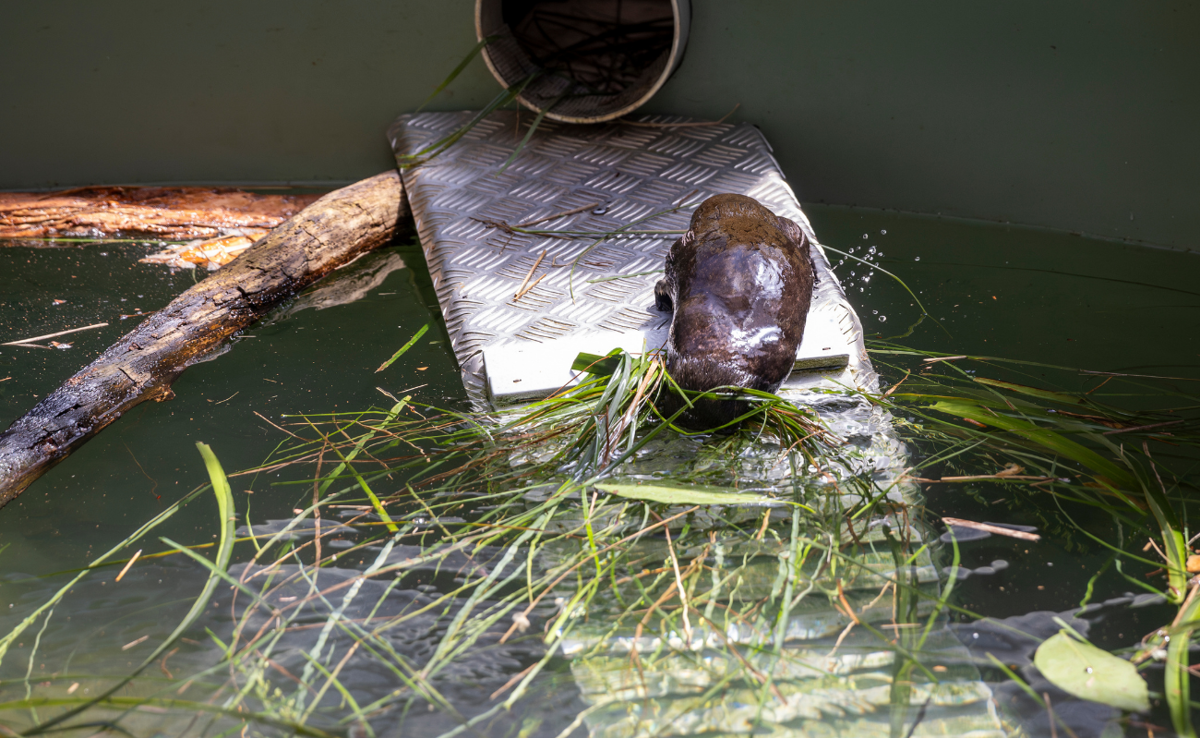
“This big clump of grasses is then going to slowly decompose in that nest as the young get older. It only needs to last four months because by that time the young have all their fur and they can maintain their own body temperature.”
Healesville Sanctuary was the first place in the world to successfully breed a Platypus in 1943. Breeding season is from August to November each year. Platypuses are monotremes which means they are an egg-laying mammal. One of only two in the world along with the Echidna.
Platypuses are classified as Vulnerable in Victoria under the Flora and Fauna Guarantee Act 1988. Threats to the survival of this species in the wild include pollution in waterways, drought and flooding. By keeping the streets clean, it helps keep the creeks clean and protects this precious animal.